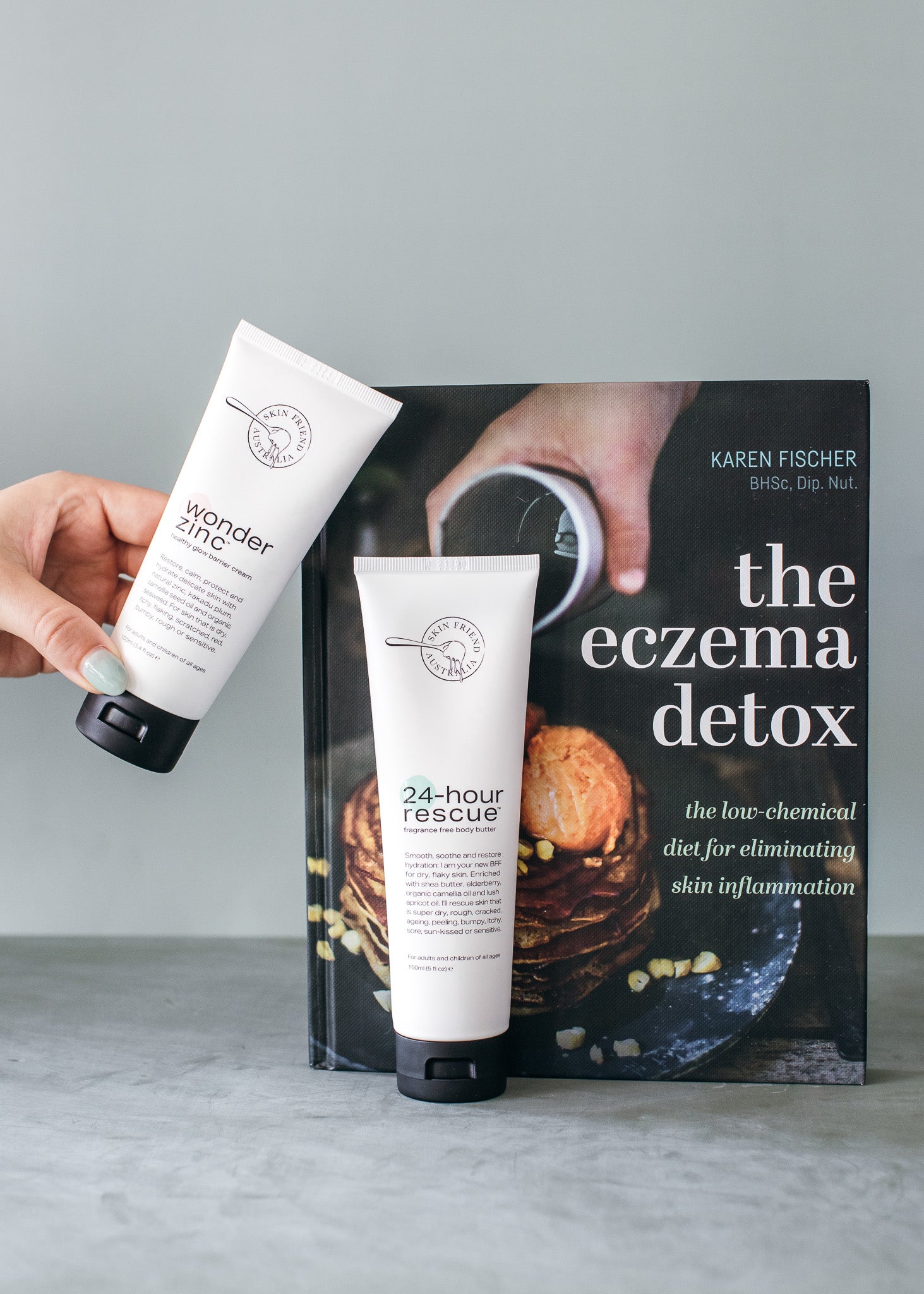
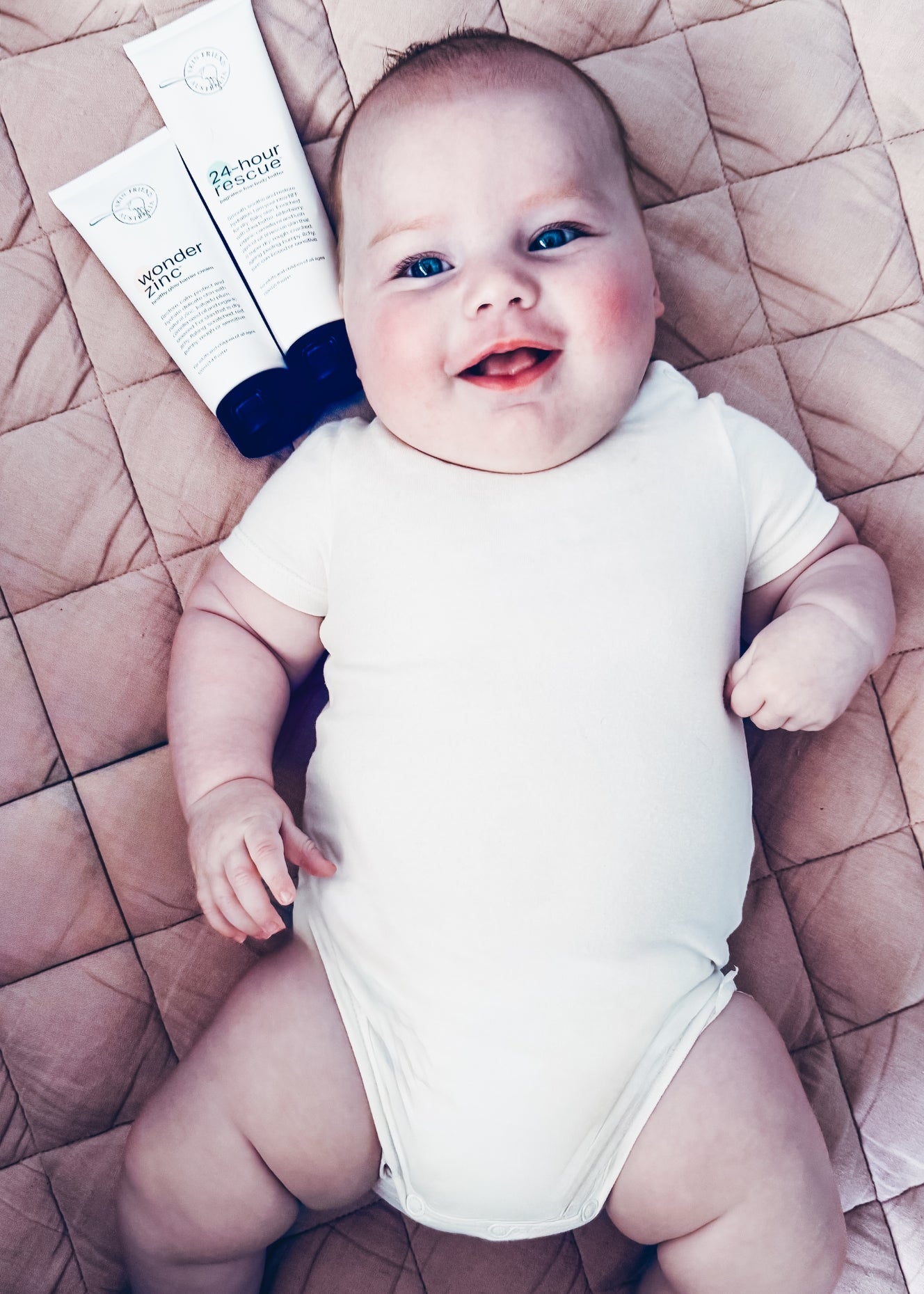
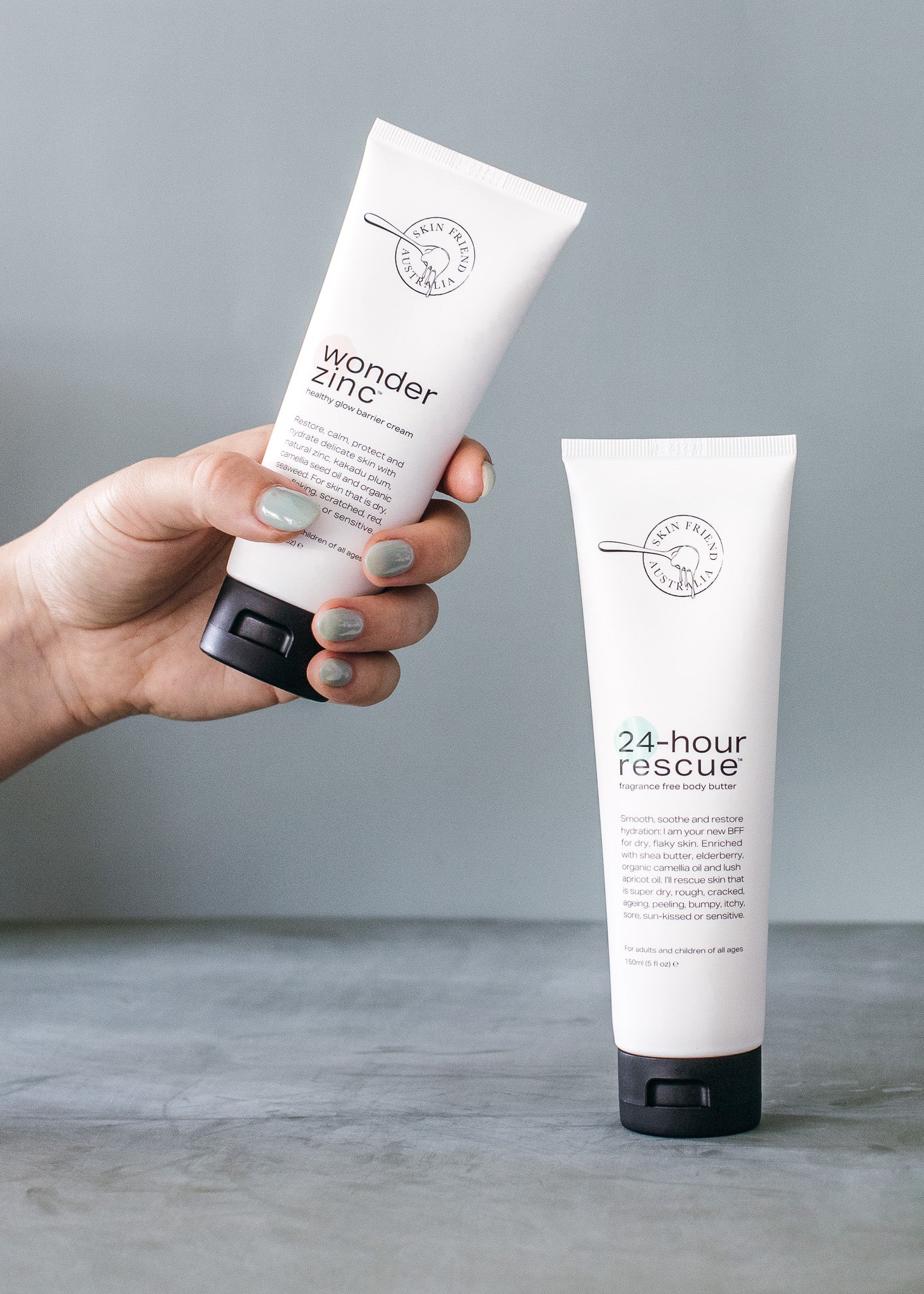
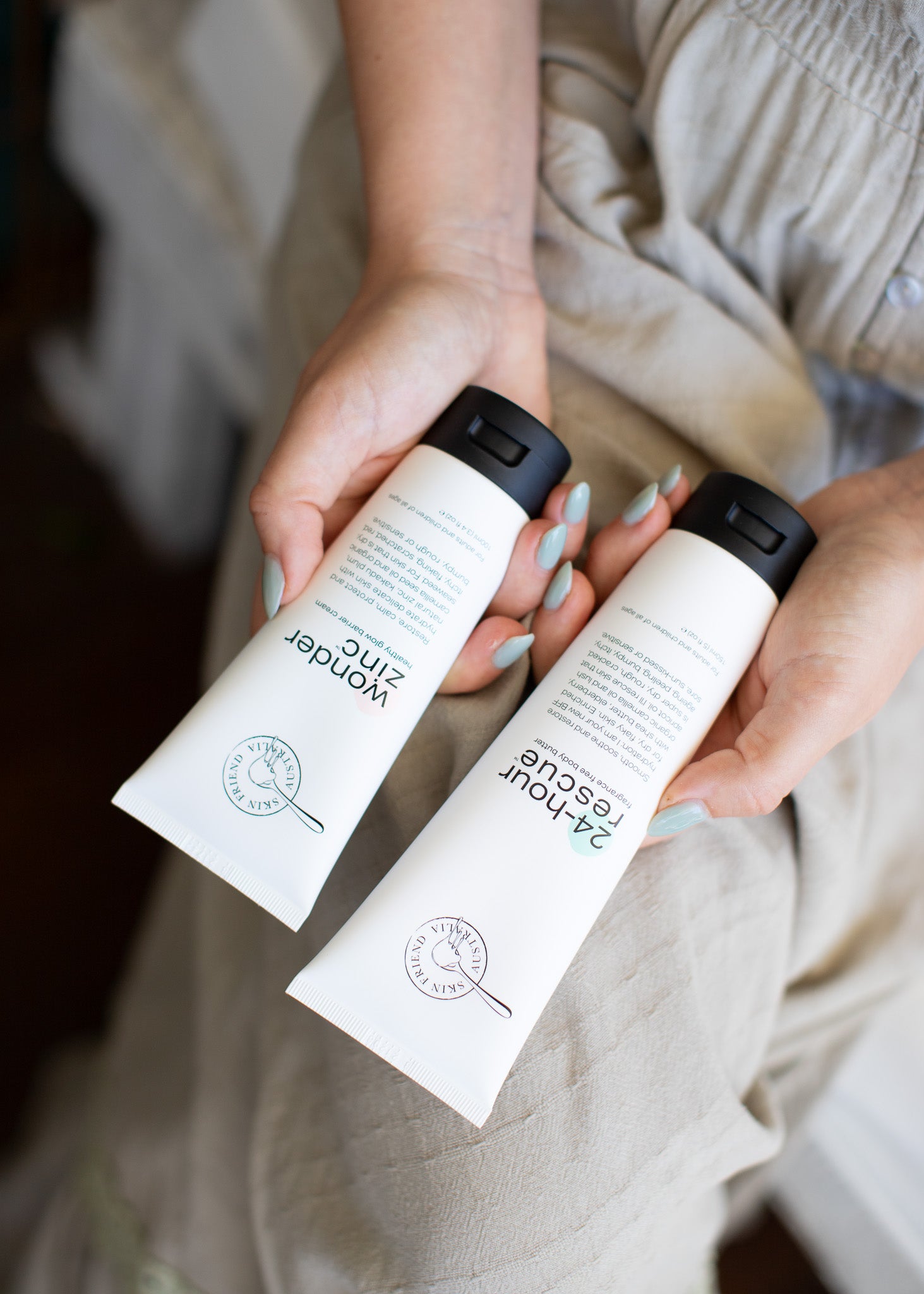
Non-toxic Eczema Cream for Babies, Toddlers, and Children
The Skin Friend baby product range was developed by Ren Karen Fischer, a qualified nutritionist and skin health expert with over 20 years of clinical experience treating eczema patients. Her 2025 systematic review and meta-analysis on eczema was published in Nutrients, a Q1 medical journal. Karen is the author of 7 health books and has worked with hundreds of families managing childhood eczema.
Why Children’s Skin Needs a Specific Eczema Cream
Children’s skin absorbs topical products at a higher rate because the stratum corneum contains fewer ceramide layers and lipid structures. Pediatric eczema (atopic dermatitis) occurs when this barrier fails to retain moisture and block external triggers.
Research in the Journal of Allergy and Clinical Immunology shows that children with eczema produce lower levels of filaggrin – a protein that maintains stratum corneum structure. This deficiency creates microscopic gaps where irritants pass through and water escapes.
Adult eczema creams often contain potent steroids, food allergens like oat and goat’s milk, and petroleum-derived emollients that penetrate a child’s thinner skin faster and deeper.
Topical corticosteroids carry a documented risk of skin thinning with prolonged use in children under 2 years.
A non-toxic eczema cream for babies eliminates these risks.
What Makes an Eczema Cream Non-Toxic and Safe for Kids
A non-toxic eczema cream for babies excludes steroids, synthetic fragrances, nut-derived oils, olive oil, food ingredients like oats and goat’s milk (dairy), parabens, PEGs, PFAS, and petroleum by-products. The table below lists 6 ingredient categories to check before applying any cream to a child’s eczema-prone skin.
|
Ingredient Category |
Risk for Eczema-Prone Skin |
Common Label Names |
|
Topical Steroids |
Thins skin with prolonged use; suppresses symptoms without repairing the barrier; rebound flares after cessation |
Hydrocortisone, betamethasone, mometasone, triamcinolone |
|
Synthetic Fragrances (parfum) |
Triggers contact dermatitis; disrupts pH; contains 14+ undisclosed compounds on average |
Fragrance, parfum, linalool, limonene, geraniol |
|
Nut-Derived Oils |
Cross-reacts with tree nut allergies; sensitizes atopic skin; blocks pores on thin infant skin |
Sweet almond oil, peanut oil, shea butter (Butyrospermum parkii) |
|
Olive Oil |
Oleic acid damages the stratum corneum in eczema-prone skin; increases TEWL and inflammation |
Olea europaea fruit oil, olive oil, squalane (olive-derived) |
|
PFAS / Forever Chemicals |
Accumulates in the body; linked to immune suppression and endocrine disruption in children |
PTFE, polyfluoroalkyl, perfluoro compounds |
|
Parabens and PEGs |
Penetrates broken skin; mimics estrogen; increases permeability of already compromised barrier |
Methylparaben, propylparaben, PEG-40, PEG-100 |
Effective ingredients work through 4 mechanisms: barrier repair, acid mantle (pH) restoration, anti-inflammatory action, and itch reduction.
Zinc oxide shields damaged skin while reducing redness. Colloidal oatmeal calms the itch at the nerve level. Mango seed butter delivers oleic-free emollience. Provitamin B5 (panthenol) relieves red skin rashes and mild eczema and dermatitis, while improving the skin barrier.
Skin Friend creams carry CertClean certification and are manufactured in Australia under TGA and Good Manufacturing Practice (GMP) standards, while meeting cosmetic safety guidelines for the US market.
Choosing Eczema Cream by Age: Babies, Toddlers, and Children
|
Factor |
Babies (0 – 12 months) |
Toddlers (1 – 3 years) |
Children (4 – 12 years) |
|
Skin Barrier State |
Thinnest; immature ceramide layers; highest TEWL; pH above 6.0 at birth |
Maturing; 15 to 20% thinner than adult; pH settling toward 4.5 – 5.5 |
Approaching adult thickness; prone to flare cycles during illness or stress |
|
Common Triggers |
Saliva, wet diapers, temperature changes, and new foods during weaning |
Dust mites, pet dander, food allergens (dairy, eggs, soy), chlorine |
Environmental allergens, sweat, stress, seasonal changes, and swimming pools |
|
Application Frequency |
3 – 4 times daily; after every bath and diaper change |
2 – 3 times daily; after bathing and before outdoor play |
2 times daily; spot-treat active flares as needed |
|
Recommended Products |
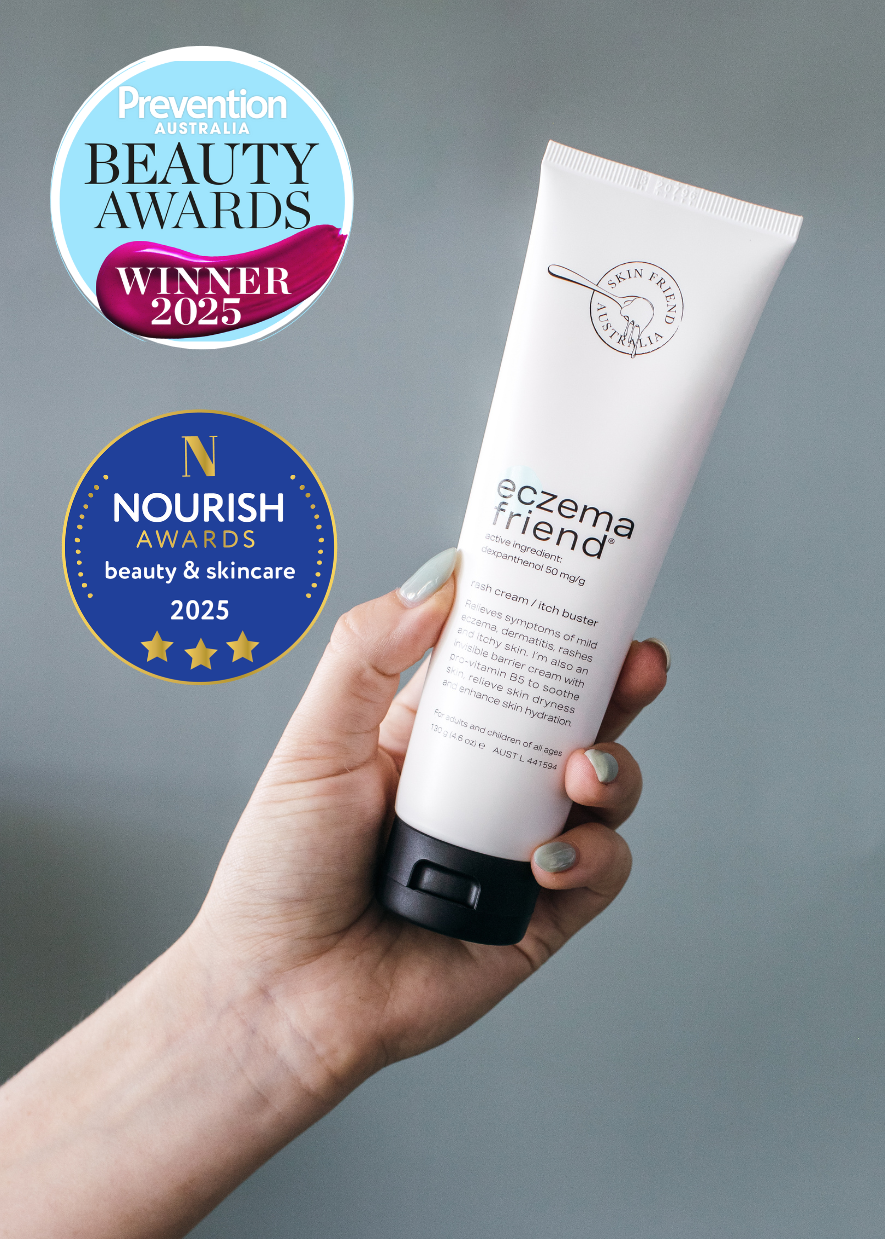
Wonder Zinc + Eczema Friend |
Eczema Friend + Wonder Zinc Cream |
Eczema Friend + Skin Friend AM supplement |
Apply a rash cream after bathing to repair the skin pH (water and cleansers can make the pH of skin too alkaline) or apply on dry skin as hydration is enhanced when skin is dry, rather than damp. Use gentle downward strokes that follow the direction of hair growth to reduce irritation.
Pat the skin dry before application, rubbing strips the fragile lipid layer that eczema-prone skin struggles to maintain.
Diaper Rash and Eczema: How to Tell the Difference
Diaper rash and eczema in the diaper area share visible symptoms but have different causes and require different treatments.
|
Factor |
Nappy/Diaper Rash (Irritant Dermatitis) |
Eczema in the Diaper Area |
|
Primary Cause |
Prolonged moisture contact with urine and feces; friction from diaper material |
Immune-mediated barrier dysfunction; genetic filaggrin defects |
|
Location |
Confined to diaper area; buttocks, inner thighs, genitals |
Extends beyond diaper area to skin folds, creases, lower abdomen |
|
Appearance |
Bright red, wet-looking patches; clear borders |
Dry, scaly, rough patches; poorly defined edges; may weep during flares |
|
Responds To |
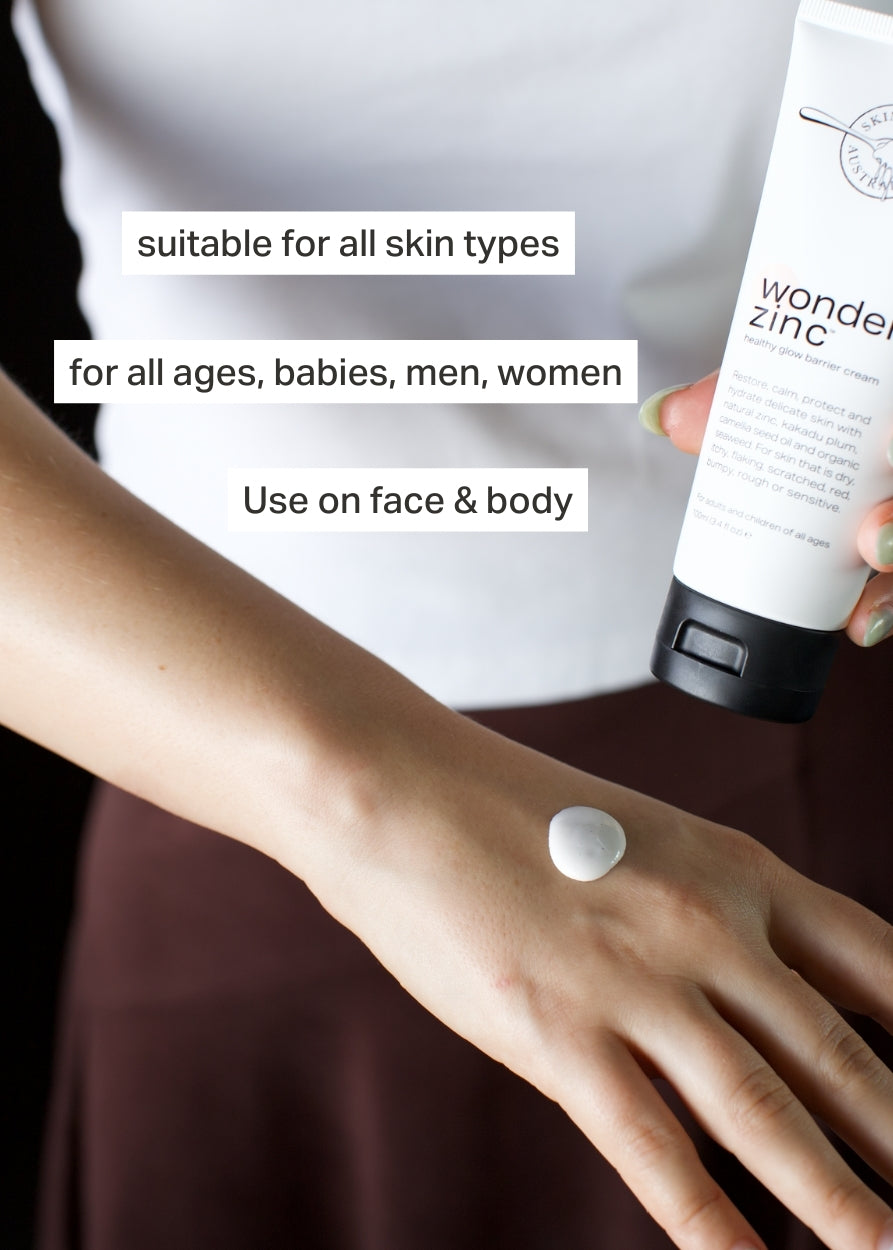
Frequent diaper changes; air drying; zinc oxide/B5 barrier cream like Wonder Zinc |
Eczema Friend for dry, scaly patches and barrier repair creams like Wonder Zinc for weeping skin and rash in the diaper area; trigger avoidance |
For standard diaper rash, WonderZinc creates a protective mineral shield that blocks moisture while skin heals. For eczema in the diaper area, Eczema Friend combines barrier protection with anti-inflammatory action without steroids.
Consult your pediatrician if a rash does not improve within 7 days, if you notice yellow crusting or weeping, or if your baby develops a fever alongside a skin flare.
Toddler Eczema Cream: Ships to the United States and Worldwide
Skin Friend ships directly from Australia to the United States and worldwide. Orders over US $100 (approximately AUD $150) qualify for free standard international shipping. All orders include a tracking number sent via email once your package is processed.
|
Shipping Option |
Estimated Delivery |
Price (USA) |
|
Free Standard International (orders over $100 USA or AUD $150) |
6 to 14 business days |
$0 |
|
Standard International |
6 to 14 business days |
US $10 (≈ AUD $15) |
|
Express Post |
3 to 6 business days |
US $15 (≈ AUD $21) |
Delivery times may be longer outside metropolitan areas and during holiday periods. Track US orders through USPS once your package leaves Australia.